
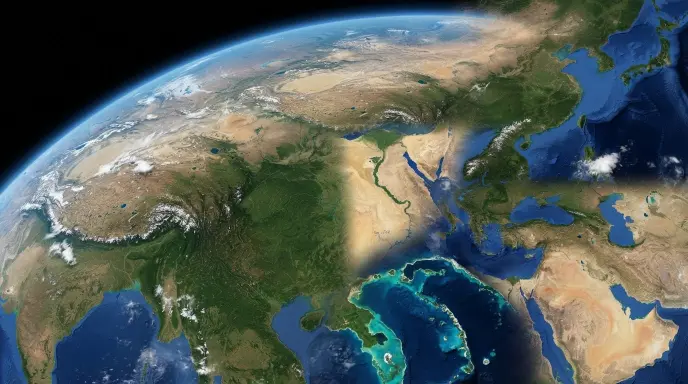
synonyms for ‘Earth’ helps you choose the most accurate word for different situations and writing styles.” Sometimes it refers to our planet as a whole. Other times it means soil or ground. And in more poetic or scientific writing, it can refer to the physical world as opposed to the sky, the heavens, or outer space. Because of this, no single synonym works for every situation. A word that fits a science paper about planetary orbits will sound completely wrong in a gardening blog about soil quality.
People search for alternatives to “earth” for a few common reasons. Writers want to avoid repeating the same word in an essay or article. Students need more precise vocabulary for academic papers. Content creators want variety for SEO and readability. And some writers simply want a word with a different tone, whether that’s more formal, more scientific, more poetic, or more casual. This guide breaks down more than 33 real alternatives, explains what each one actually means, and shows you exactly when to use it so your writing stays accurate and natural.
Quick Answer
Common synonyms for “earth” include world, globe, planet, ground, soil, land, terra, sphere, orb, and dry land. The right choice depends on meaning: use “planet” or “globe” for the astronomical sense, and “soil,” “ground,” or “dirt” when you mean the physical material beneath your feet.
Quick List: Fast Reader Section
Closest alternatives (referring to the planet):
- World
- Planet
- Globe
- Terra
- Terra Firma
- Sphere
- Orb
- Blue Planet
- Third Rock (from the Sun)
Formal / scientific alternatives: 10. The planet Earth 11. Terrestrial sphere 12. Terrestrial globe 13. The biosphere 14. The Earth’s surface
Neutral, everyday alternatives (referring to soil/ground): 15. Ground 16. Soil 17. Land 18. Dirt 19. Turf 20. Terrain 21. Loam 22. Topsoil 23. Earthen material
Broader or contextual alternatives: 24. Nature 25. The environment 26. Mother Nature 27. Humanity’s home 28. The physical world 29. Dry land 30. Mainland
Poetic or literary alternatives: 31. Mother Earth 32. Gaia 33. The Blue Marble 34. This mortal coil (archaic, philosophical) 35. The good earth
Casual/informal alternatives: 36. Dirt (casual for soil) 37. The planet (spoken shorthand) 38. This rock (slang for Earth)
Formal Alternatives
World
Meaning: The planet Earth, often emphasizing human society, civilization, or global scope rather than the physical rock itself.
Explanation: “World” is a near synonym of “earth” but leans toward the human and cultural side of the planet — countries, people, and events — rather than the geological or astronomical object.
Example: “Climate change affects every country in the world.”
Best Use: News writing, global topics, discussions about humanity or society.
Worst Use: Scientific or astronomical writing, where “planet” or “Earth” is more precise.
Tone: Neutral to formal.
Planet
Meaning: A celestial body that orbits a star; used specifically to describe Earth’s astronomical classification.
Explanation: This is a true synonym only in the astronomical sense. It emphasizes Earth’s identity as one of several planets, which “earth” alone doesn’t always convey.
Example: “Earth is the only planet known to support life.”
Best Use: Science writing, astronomy, education, and space-related content.
Worst Use: Casual conversation about soil, land, or everyday life — it sounds oddly technical.
Tone: Formal, scientific.
Globe
Meaning: The Earth described as a spherical object, often used in a geographic or worldwide sense.
Explanation: “Globe” is a near synonym that highlights Earth’s round shape and its role as a unified geographic whole.
Example: “The company has offices across the globe.”
Best Use: Business writing, geography, travel content.
Worst Use: Scientific papers requiring precise terminology, or sentences about physical ground.
Tone: Formal to neutral.
Terra
Meaning: The Latin word for “earth” or “land,” used in scientific and technical naming.
Explanation: “Terra” is a true synonym in Latin-derived scientific vocabulary but is rarely used in plain English sentences outside of specific terms like “terra firma” or “extraterrestrial.”
Example: “The mission compares surface data from Terra to that of Mars.”
Best Use: Scientific naming, academic papers, space agency documentation.
Worst Use: Everyday writing — it sounds overly technical or unfamiliar to general readers.
Tone: Highly formal, academic.
Terra Firma
Meaning: Solid ground, as opposed to sea or air.
Explanation: This is a narrower expression. It doesn’t mean “earth” as a planet — it specifically contrasts solid land with water or flight.
Example: “After weeks at sea, the sailors were relieved to stand on terra firma again.”
Best Use: Travel writing, literature, situations contrasting land with sea or sky.
Worst Use: Scientific or planetary contexts.
Tone: Formal, slightly literary.
Sphere
Meaning: A three-dimensional round shape; used to describe Earth’s physical form.
Explanation: This is a broader expression, since “sphere” describes shape, not identity. It only means “earth” when context makes that clear.
Example: “Ancient astronomers debated whether the sphere we live on was flat or round.”
Best Use: Scientific, historical, or educational writing about Earth’s shape.
Worst Use: General conversation, where it sounds vague without added context.
Tone: Formal, technical.
Orb
Meaning: A spherical object, often used poetically to describe Earth or other celestial bodies.
Explanation: This is a near synonym with a literary flavor. It’s rarely used in modern factual writing.
Example: “The pale blue orb hung silently against the darkness of space.”
Best Use: Poetry, creative writing, descriptive science communication.
Worst Use: Technical reports or business writing — it sounds overly dramatic.
Tone: Poetic, formal.
The Terrestrial Sphere
Meaning: A formal, scientific way to refer to Earth as a physical planetary body.
Explanation: True synonym in academic contexts, though rarely used outside of specialized writing.
Example: “Early cartographers attempted to map the terrestrial sphere using limited instruments.”
Best Use: Academic history of science, formal essays.
Worst Use: Everyday communication — it sounds stiff and outdated.
Tone: Highly formal, archaic-leaning.
The Terrestrial Globe
Meaning: A formal term for Earth viewed as a spherical, mapped object.
Explanation: Similar to “terrestrial sphere,” this phrase is a true but rarely used synonym, mostly seen in older scientific or geographic texts.
Example: “The exhibit features one of the oldest surviving terrestrial globes.”
Best Use: Museum descriptions, historical or geographic writing.
Worst Use: Modern conversational writing.
Tone: Formal, historical.
The Biosphere
Meaning: The zone of Earth where life exists, including land, water, and atmosphere.
Explanation: This is a narrower expression. It doesn’t mean “earth” as a whole planet — it specifically refers to the life-supporting layer.
Example: “Pollution threatens the delicate balance of the biosphere.”
Best Use: Environmental science, ecology, sustainability writing.
Worst Use: General references to the planet itself, since it excludes the planet’s core and non-living structure.
Tone: Formal, scientific.
The Earth’s Surface
Meaning: The outer layer of the planet, including land and oceans.
Explanation: A narrower, more specific expression than “earth,” useful when you’re discussing geography or geology rather than the whole planet.
Example: “Erosion gradually reshapes the Earth’s surface over thousands of years.”
Best Use: Geology, geography, environmental writing.
Worst Use: References to humanity, culture, or the planet as a whole entity.
Tone: Neutral to formal.
Semi-Formal & Neutral Alternatives
Ground
Meaning: The solid surface of the land, especially what you stand or walk on.
Explanation: This is a contextual alternative, not a synonym for the planet. It only works when “earth” refers to physical land beneath your feet.
Example: “The hikers set up camp on flat ground near the river.”
Best Use: Everyday writing, outdoor activities, construction, agriculture.
Worst Use: Any sentence about the planet as a whole.
Tone: Neutral, everyday.
Soil
Meaning: The loose material on the Earth’s surface where plants grow.
Explanation: A true synonym only in the agricultural or gardening sense of “earth.” It never substitutes for “planet.”
Example: “Rich soil is essential for growing healthy vegetables.”
Best Use: Gardening, farming, environmental science.
Worst Use: Astronomy or global-scale writing.
Tone: Neutral, practical.
Land
Meaning: The solid part of Earth’s surface, as opposed to sea or air; can also mean a specific territory.
Explanation: A near synonym in physical contexts, though it shifts meaning slightly toward property, geography, or nationhood in other sentences.
Example: “The farmers depend on this land for their livelihood.”
Best Use: Real estate, geography, agriculture, legal descriptions of property.
Worst Use: References to the whole planet as a celestial body.
Tone: Neutral.
Dirt
Meaning: Loose earth or soil, often used casually.
Explanation: A near synonym for “soil” but with a more informal, everyday feel. Some readers associate it with uncleanliness.
Example: “The kids came inside covered in dirt after playing outside.”
Best Use: Casual writing, children’s content, everyday conversation.
Worst Use: Formal reports, academic writing, or professional documents.
Tone: Casual, neutral in most contexts.
Turf
Meaning: A layer of earth covered with grass, or grassy ground in general.
Explanation: A narrower expression, since it specifically implies grass-covered ground, not all types of earth or soil.
Example: “The stadium replaced its natural turf with an artificial surface.”
Best Use: Sports writing, landscaping, lawn care.
Worst Use: Scientific or planetary writing.
Tone: Neutral, specific.
Terrain
Meaning: The physical features of a stretch of land, including its shape and surface.
Explanation: A broader expression than “earth” in the ground sense — it describes the character of land rather than the material itself.
Example: “The mountain terrain made the trail difficult to hike.”
Best Use: Travel, outdoor recreation, military or geographic writing.
Worst Use: Simple references to soil or dirt.
Tone: Neutral to formal.
Loam
Meaning: A fertile type of soil made of sand, silt, and clay.
Explanation: A narrower expression. It refers to one specific kind of soil, not earth or ground in general.
Example: “Loam is ideal for growing most garden vegetables.”
Best Use: Gardening, horticulture, agricultural writing.
Worst Use: General or non-technical writing about ground.
Tone: Neutral, technical.
Topsoil
Meaning: The uppermost layer of soil, richest in nutrients.
Explanation: A narrower expression describing a specific layer of earth, not the whole ground or planet.
Example: “Years of erosion stripped away the farm’s topsoil.”
Best Use: Agriculture, environmental science, landscaping.
Worst Use: General writing about “earth” as a broad concept.
Tone: Neutral, technical.
Nature
Meaning: The physical world, including plants, animals, and landscapes, as distinct from human-made things.
Explanation: A broader expression. “Nature” includes far more than “earth” in the ground sense and doesn’t specifically mean the planet either.
Example: “Spending time in nature can reduce stress.”
Best Use: Wellness writing, environmental topics, casual and formal contexts alike.
Worst Use: Precise scientific writing about the planet’s structure.
Tone: Neutral, versatile.
The Environment
Meaning: The natural world, including the air, water, and land that surround living things.
Explanation: A broader expression that overlaps with “earth” but focuses on ecological systems rather than the physical planet itself.
Example: “The new policy aims to protect the environment from industrial waste.”
Best Use: Policy writing, sustainability topics, business and government communication.
Worst Use: Casual references to soil or a specific patch of ground.
Tone: Neutral to formal.
The Physical World
Meaning: Tangible reality, as opposed to abstract ideas or digital spaces.
Explanation: A broader, more philosophical expression. It touches on “earth” as a concept but isn’t a direct substitute in most sentences.
Example: “Virtual reality is changing how we interact with the physical world.”
Best Use: Philosophy, technology writing, abstract discussions.
Worst Use: Everyday, concrete references to ground or planet.
Tone: Formal, conceptual.
Informal / Casual Alternatives
Casual alternatives for “earth” mostly apply to its meaning as “ground” or “dirt,” since the planet itself doesn’t have many slang terms in everyday English.
This Rock
Meaning: A casual, sometimes humorous way to refer to Earth as a planet.
Example: “We only get one shot at taking care of this rock.”
When it sounds natural: Informal speech, social media, casual environmental messaging.
When to avoid it: Professional, academic, or formal writing.
Tone: Playful, informal.
The Planet (spoken shorthand)
Meaning: A relaxed, conversational way to say “Earth.”
Example: “We need to do more to protect the planet.”
When it sounds natural: Everyday conversation, casual articles, social campaigns.
When to avoid it: Highly technical or scientific writing where “Earth” is the standard term.
Tone: Casual, neutral.
Dirt (casual for soil)
Meaning: An informal word for soil or loose ground.
Example: “Don’t track dirt across the kitchen floor.”
When it sounds natural: Everyday speech, informal writing.
When to avoid it: Scientific or agricultural writing requiring precise terms like “soil” or “loam.”
Tone: Casual.
A genuine slang term for “earth” as a full planet is uncommon. Most casual alternatives are simply relaxed versions of formal words, not entirely separate slang vocabulary.
True Synonyms vs. Contextual Alternatives
| Type | What It Means | Can It Replace the Original? |
|---|---|---|
| True synonym | A word with nearly identical meaning in the same context | Yes, usually with no change in meaning |
| Near synonym | A word with a very similar meaning, but a slightly different tone or emphasis | Often, but the tone may shift |
| Contextual alternative | A word that only works as a substitute in certain sentence types | Only in the right context (e.g., “ground” for soil, not for planet) |
| Broader expression | A word covering more ground than “earth” alone | Sometimes, but may lose precision |
| Narrower expression | A word covering less than “earth,” focusing on one aspect | Rarely as a full replacement; useful for specific details |
For example, “planet” is a true synonym when talking about Earth astronomically, but it becomes a contextual alternative — and sometimes an awkward one — when the sentence is really about soil or dirt.
Industry-Specific Usage
Business Writing
In business writing, “world” and “globe” work well when discussing global markets or international operations. “Earth” itself sounds too literal or scientific in most corporate contexts.
Example: “Our supply chain now spans six continents across the globe.”
Corporate Communication
Corporate reports and sustainability statements often use “the environment” or “the planet” to describe environmental responsibility, since these terms feel approachable and mission-driven.
Example: “Our new packaging reduces our impact on the planet.”
Academic Writing
Academic and scientific writing benefits from precision. Use “planet,” “terrestrial sphere,” or “Earth’s surface” depending on whether you’re discussing the whole body, its shape, or its outer layer.
Example: “The study measured temperature changes across the Earth’s surface over five decades.”
Customer Service
Customer service writing rarely needs “earth” directly, but when discussing shipping or environmental practices, simpler words like “the planet” or “the environment” sound more approachable than technical terms.
Example: “We’re proud to offer packaging that’s better for the planet.”
Legal Writing
Legal documents sometimes use “land” instead of “earth” when referring to property boundaries or real estate. These terms are not fully interchangeable — “land” has specific legal weight tied to ownership and boundaries, while “earth” or “ground” do not carry the same legal precision. Always confirm exact terminology with a legal professional or relevant statute, since legal meaning can vary depending on the situation.
Email Communication
In professional emails, writers typically choose “the planet,” “the environment,” or “global” language rather than the literal word “earth,” which can sound overly blunt or scientific in a business tone.
Email Examples
Subject: Update on Our Sustainability Initiative
Hi Team,
I wanted to share a quick update on our packaging redesign. The new materials cut plastic waste by 40%, which is a meaningful step toward reducing our impact on the planet. I’ll send the full report by Friday.
Best, Maria
Subject: Global Expansion Timeline
Hi Daniel,
As we expand our operations across the globe, I’d like to schedule a call to align on regional priorities for Q3. Are you available Thursday afternoon?
Thanks, Alex
Subject: Soil Testing Results — Riverside Property
Hi Mr. Coleman,
Attached are the soil test results for the Riverside property. The loam content is strong, which should support a wide range of crops. Let me know if you’d like to discuss next steps.
Regards, Sandra
Subject: Environmental Impact Report Draft
Hi Priya,
Here’s the first draft of our environmental impact report. I focused the introduction on how our operations affect the surrounding land and water systems. Feel free to add comments directly in the doc.
Thanks, Tom
Subject: Follow-Up: Land Survey Request
Hi Mr. Reyes,
Following up on our call last week — we’re ready to schedule the land survey for the northern property line. Would next Tuesday work for your team?
Best regards, Jasmine
Subject: Classroom Project — Planetary Science Unit
Hi Parents,
Next week, students will begin our unit on the solar system, starting with a close look at Earth as one of eight planets. Please make sure students bring their science notebooks daily.
Thank you, Mr. Alvarez
Subject: Vendor Update — Compostable Packaging
Hi James,
Great news — our new supplier offers fully compostable packaging that breaks down safely without harming the soil or surrounding ecosystems. I’ll send samples by end of week.
Best, Renee
Short Dialogue Examples
Workplace Person A: Have you seen the new sustainability numbers? Person B: Yeah, it’s great — we’re finally cutting our footprint on the planet.
Classroom Person A: What’s the difference between Earth and the Earth’s surface? Person B: Earth is the whole planet. The surface is just the outer layer we see and walk on.
Customer Service Person A: Is this packaging eco-friendly? Person B: Yes, it’s fully biodegradable and safe for the environment.
Casual Conversation Person A: I really think we need to take better care of this rock we live on. Person B: Same. Even small changes add up.
Professional Discussion Person A: How’s the soil quality on the new farmland? Person B: Pretty rich, actually. Good loam content, so crops should do well.
How to Replace “Earth” in a Sentence
Original: Earth is the third planet from the sun. Alternative: The planet Earth is the third body orbiting the sun. Why it works: “Planet” adds astronomical clarity without changing meaning.
Original: She planted the seeds in the earth. Alternative: She planted the seeds in the soil. Why it works: “Soil” is more precise for gardening contexts.
Original: We only have one earth. Alternative: We only have one planet. Why it works: Slightly more formal, commonly used in environmental messaging.
Original: The company operates across the earth. Alternative: The company operates across the globe. Why it works: “Globe” sounds more natural in business writing.
Original: The plane finally touched the earth. Alternative: The plane finally touched the ground. Why it works: “Ground” is the natural word for a landing surface.
Original: The farmers depend on the earth for their crops. Alternative: The farmers depend on the land for their crops. Why it works: “Land” fits agricultural and property-related contexts better.
Original: He was covered in earth after the hike. Alternative: He was covered in dirt after the hike. Why it works: “Dirt” is the natural, casual word for this situation.
Original: Scientists study how the earth formed. Alternative: Scientists study how the terrestrial sphere formed. Why it works: More formal and specific for academic or historical science writing, though it may sound stiff in general use.
Comparison Table
| Phrase | Tone | Meaning / Scope | Best Use | Example |
|---|---|---|---|---|
| World | Neutral | Planet, focused on people/society | News, global topics | “News spreads fast around the world.” |
| Planet | Formal | Astronomical body | Science, education | “Earth is a rocky planet.” |
| Globe | Formal | Planet, geographic scope | Business, travel | “Sales grew across the globe.” |
| Ground | Neutral | Physical surface underfoot | Everyday, outdoors | “Leaves covered the ground.” |
| Soil | Neutral | Material for plant growth | Gardening, farming | “The soil needs more nutrients.” |
| Land | Neutral | Territory or solid surface | Real estate, agriculture | “They bought land near the coast.” |
| Dirt | Casual | Loose soil | Everyday speech | “Wipe the dirt off your shoes.” |
| Terrain | Neutral/Formal | Land’s physical features | Travel, geography | “The terrain was rocky and steep.” |
| The environment | Formal | Natural surroundings | Policy, sustainability | “Protect the environment for future generations.” |
| Nature | Neutral | Natural world broadly | Wellness, general writing | “She loves spending time in nature.” |
Which Alternative Should You Choose?
Formal writing: Use “planet” or “Earth’s surface” for scientific accuracy.
Business communication: Use “globe” or “world” to describe reach or operations.
Academic writing: Use “terrestrial sphere,” “planet,” or “biosphere,” depending on precision needed.
Legal writing: Use “land,” but confirm exact legal definitions apply to your situation.
Professional email: Use “the planet” or “the environment” for sustainability topics.
Everyday conversation: Use “ground,” “dirt,” or “the planet” for natural, relaxed phrasing.
Casual messages: Use “this rock” or “dirt” for a lighter, informal tone.
Grammar & Usage Guide
Capitalization: Capitalize “Earth” when referring to the planet by name, similar to how you’d capitalize “Mars” or “Jupiter.” Lowercase “earth” when it means soil or ground.
Example: “Earth orbits the sun.” vs. “The earth in this garden is dry.”
Articles: Use “the” before “earth” when referring to the planet in general conversation (“the earth is round”), but no article is needed when using “Earth” as a proper noun in scientific writing (“Earth orbits the sun”).
Prepositions: Common natural pairings include “on Earth,” “on the ground,” “in the soil,” and “across the globe.” Avoid unnatural combinations like “in the globe,” which doesn’t make sense.
Singular/Plural: “Earth” and “ground” are uncountable in their planetary and physical senses — they don’t take a plural form. “Soils” can be plural when referring to different types of soil in a scientific context.
Common word combinations: “Solid ground,” “fertile soil,” “planet Earth,” “around the globe,” and “return to earth” are all natural, frequently used phrases.
Common Mistakes to Avoid
- Treating “planet” and “ground” as interchangeable. They refer to completely different things — one is astronomical, the other is physical surface.
- Using “terra” or “terrestrial sphere” in casual writing. These sound overly formal and out of place in everyday communication.
- Forgetting to capitalize “Earth” when referring to the planet by name. This is a common but easily fixed grammar error.
- Using “dirt” in professional or academic writing. It’s too casual and can sound unpolished.
- Assuming “land” always means the same as “ground.” “Land” often carries legal or ownership implications that “ground” does not.
- Overusing “world” when precision matters. In scientific writing, “planet” is more accurate than the broader term “world.”
- Repeating the same alternative throughout an article. Varying your word choice keeps writing natural and engaging.
- Ignoring tone mismatches. Using “this rock” in a formal report will feel jarring and unprofessional.
When Not to Use the Original Phrase
Avoid using “earth” directly when:
- The sentence is too formal for the word “earth.” In scientific writing, “planet” or “Earth’s surface” is more precise.
- You’re discussing legal property. “Land” is the more accurate and legally recognized term.
- You’re writing about gardening or farming. “Soil” is far more specific and useful.
- The tone needs to be casual. “Dirt” or “ground” often sound more natural in everyday speech.
- You’ve already used “earth” multiple times in the same paragraph. Repetition can make writing feel clunky; alternatives add variety.
- The context is about landing or standing on a surface. “Ground” is the more natural choice.
That said, “earth” is still the best choice when you want a simple, universally understood word that works in almost any context without needing extra explanation. It remains the clearest option in general, non-technical writing.
Advanced Writer Tips
Tone Control: To sound more formal, choose “planet” or “terrestrial sphere.” To sound more casual, use “ground,” “dirt,” or “this rock.”
Professional Email Etiquette: Stick to widely understood terms like “the planet” or “the environment” rather than technical or poetic alternatives, which can feel out of place in business communication.
Politeness: Word choice rarely affects politeness with this particular keyword, but overly casual terms like “dirt” can feel unprofessional in client-facing messages.
Context Alignment: Always ask whether you mean the planet, the ground, or the broader natural world before choosing a synonym — this single decision determines which word category fits.
Precision: When scientific accuracy matters, choose specific terms like “topsoil,” “biosphere,” or “Earth’s surface” instead of the general word “earth.”
Readability: Shorter, everyday words like “ground” or “soil” often read more clearly than formal alternatives like “terrestrial sphere,” especially for general audiences.
Related Questions
What is another way to say “earth”? Common alternatives include “world,” “planet,” “globe,” “ground,” and “soil,” depending on the intended meaning.
What is a professional alternative to “earth”? In professional writing, “the planet,” “the environment,” or “globe” typically sound more polished than the plain word “earth.”
Is “earth” formal? “Earth” itself is neutral — neither particularly formal nor casual — which is part of why it’s so versatile across different types of writing.
Can I use “land” instead of “earth”? Only in specific contexts, such as property, agriculture, or geography. “Land” doesn’t work as a substitute when referring to the planet as a whole.
What’s the difference between “earth” and “ground”? “Earth” can mean the planet or the physical material of soil, while “ground” specifically refers to the surface beneath your feet.
FAQs:
What does “earth” mean exactly?
“Earth” has two main meanings: the name of our planet, and the loose material — soil or ground — that covers its surface. Context determines which meaning applies.
Is “world” the same as “earth”?
Not exactly. “World” often emphasizes people, society, and global events, while “earth” more directly refers to the physical planet or its surface material.
What’s a good formal synonym for “earth”?
“Planet” is the most reliable formal synonym when referring to Earth astronomically. “Terrestrial sphere” works in highly academic or historical writing but can sound stiff in general use.
Can “soil” and “earth” be used interchangeably?
Yes, in gardening or agricultural contexts, “soil” and “earth” are true synonyms. However, “soil” is more precise and preferred in technical or professional writing.
Why does capitalization matter with “Earth”?
Capitalizing “Earth” signals that you’re referring to the planet by name, similar to “Mars” or “Venus.” Lowercase “earth” usually refers to soil or ground instead.
What’s the most natural casual alternative to “earth”?
“Ground” and “dirt” are the most natural casual alternatives, especially in everyday conversation about physical surfaces.
Should I avoid using “earth” too many times in one article?
Yes. Repeating any word too often can make writing feel repetitive. Using varied alternatives like “planet,” “globe,” “soil,” or “ground” — depending on context — keeps the writing natural and engaging.
Conclusion:
“Earth” is a simple word with more depth than it first appears, covering everything from the planet we live on to the soil beneath our feet. Because of this range, no single synonym replaces it in every sentence. “Planet,” “globe,” and “world” work well when you’re talking about Earth as a celestial body, while “soil,” “ground,” “land,” and “dirt” fit situations involving the physical surface or material.
The key to choosing the right alternative is understanding exactly what you mean before you write. A gardening article calls for “soil,” a business report calls for “globe,” and a science paper calls for “planet.” Formal writing benefits from more specific or technical terms, while casual writing reads better with everyday words. By paying attention to tone, audience, and precise meaning, you can replace “earth” naturally and keep your writing clear, accurate, and easy to read.

Emma is a passionate writer who enjoys creating fun, engaging, and reader-friendly content. She has a talent for turning simple ideas into entertaining articles that inform and inspire. With a love for wordplay, humor, and creative storytelling, Emma helps readers discover fresh perspectives and enjoy content that is both useful and enjoyable. When she’s not writing, she enjoys exploring new trends, reading, and finding inspiration in everyday life.